Appliance Installation
New refrigerators, ranges and wall ovens set in, leveled, connected and tested, with the old one hauled away on request.
DetailsA range hood is only as good as its duct. The right size hood, mounted at the right height and vented outside through a short, smooth duct, actually clears the smoke.
Updated October 2026
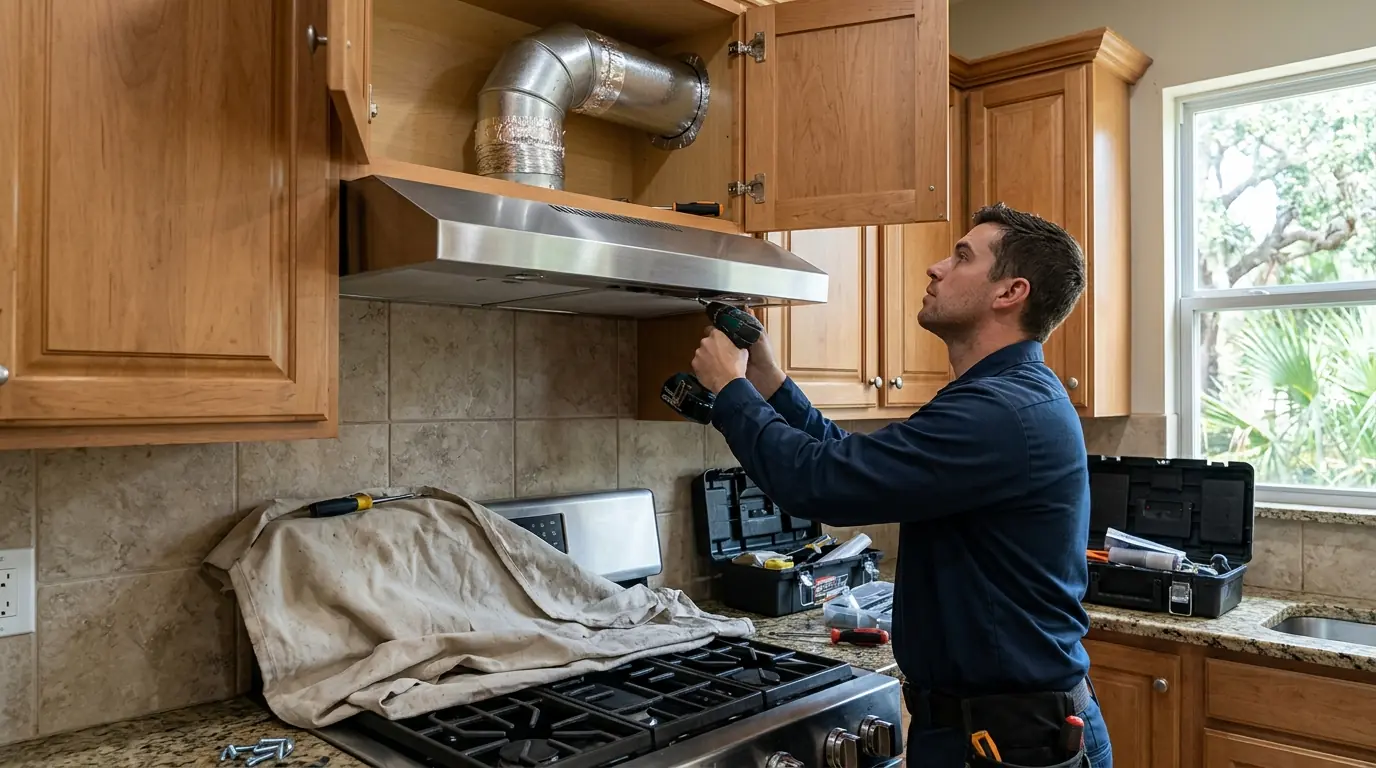
Range hood installation in Jacksonville covers sizing the hood to the cooktop, mounting it at the right height, connecting power, and venting it outside through rigid duct with a damper, or setting it to recirculate with charcoal filters when no duct is possible. We test the draw before we leave.
A hood should be at least as wide as the cooktop, and wider for gas ranges and heavy cooking. It is mounted at the height the manufacturer specifies, usually somewhere between 24 and 36 inches above the cooking surface. Too high and the smoke escapes around it; too low and it is in the way.
The duct matters most. Rigid metal duct of the size the hood calls for, with as few elbows as possible and a damper at the exit, lets the blower work. A hood connected to a long run of crushed flexible duct, or to nothing at all in the attic, is mostly noise.
Cost
Range hood installs are priced per job after we see the space. A swap onto existing duct and wiring is the simplest; new duct routes and island hoods cost more.
No flat price over the phone. We price after the diagnosis, part and labor separately, so you can decide before any work starts.
Compare the options
| Point | Ducted | Ductless |
|---|---|---|
| Removes heat and moisture | Yes | No |
| Removes grease | Yes | Partly, through filters |
| Install effort | Duct route needed | Simpler |
| Ongoing upkeep | Clean filters | Replace charcoal filters |
The jobs this page covers
Under-cabinet hoods mount to the underside of the cabinet above the range and vent up through the cabinet or out the back wall. When we replace an old hood we check whether the existing duct matches the new hood's outlet size and adapt it if needed. We fasten the hood to the cabinet framing, connect the wiring, which is often hard-wired, and seal the duct joints with foil tape rather than cloth duct tape. Then we test each fan speed and the lights and check the damper opens.
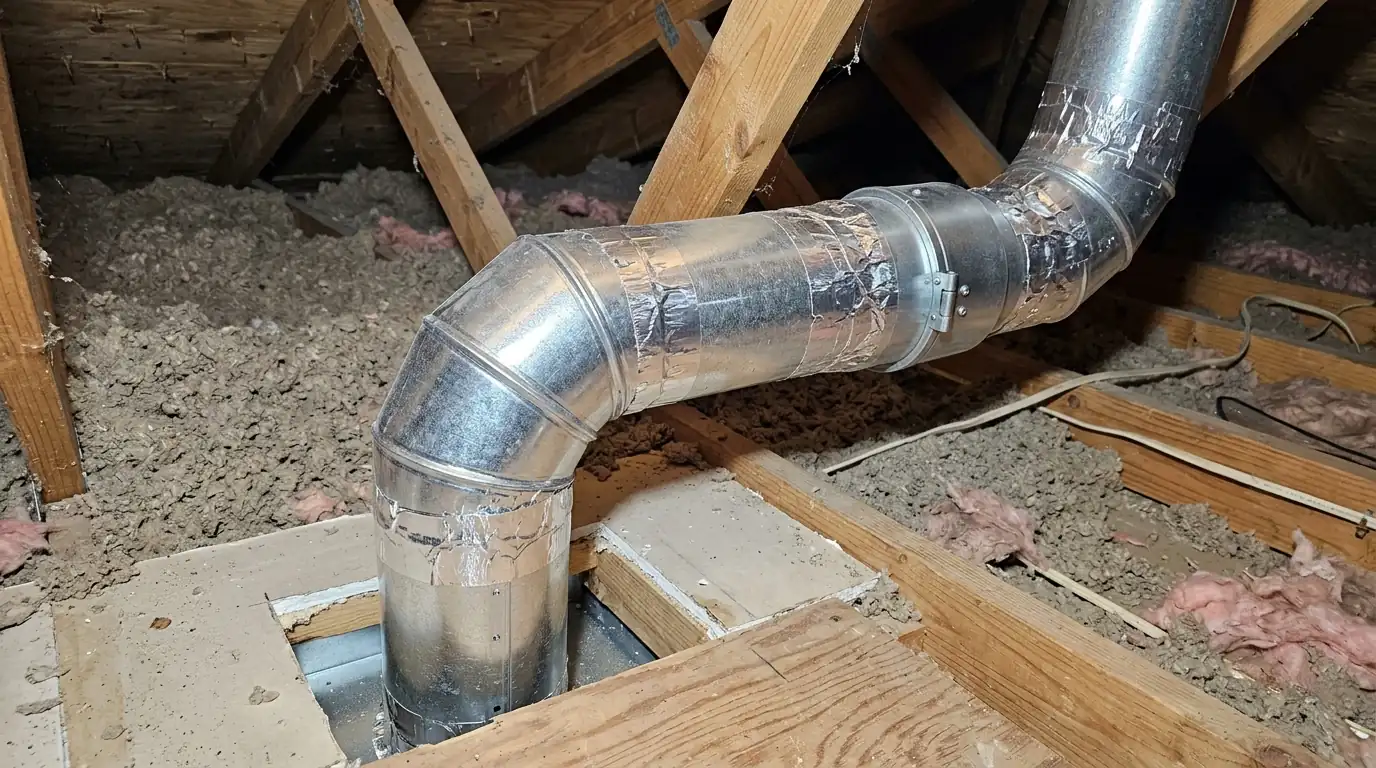
Chimney hoods mount to the wall or hang from the ceiling over an island, and they are heavier than they look. Wall hoods need solid blocking or studs behind the mounting bracket; island hoods need a ceiling bracket fastened into joists or added blocking. The chimney cover hides the duct, which runs up into the ceiling and out through the roof or a side wall. We confirm the framing and the duct route before install day, because the hood itself goes up quickly once the structure is ready.
A ducted hood moves smoke, grease and heat out of the house and is the better choice whenever a duct route exists. A ductless hood recirculates air through grease and charcoal filters, which catches grease and some odor but returns heat and moisture to the kitchen. In a humid climate that extra moisture is noticeable. We recommend ducted wherever the route allows it, and set ductless hoods up correctly with fresh charcoal filters when it does not. We explain the filter schedule either way.
Jacksonville air already carries a lot of moisture, so a kitchen that recirculates steam from a pot of boiling water feels it more than a kitchen in a dry climate. That makes ducted hoods worth the effort here whenever the house allows a route through an exterior wall or the roof. We look for that route first when you plan a new hood.
Step by step
Checked against the cooktop and the house.
Blocking, duct route and damper.
Hood fastened and connected.
Fan speeds, lights and damper checked.
Timing
An under-cabinet swap onto existing duct usually takes one to two hours. Wall and island chimney hoods take longer, and when new duct routes or ceiling blocking are needed, that preparation is done first so the hood can be mounted and tested in one visit.
FAQ
Usually between 24 and 36 inches, as specified in the hood's instructions.
At least as wide as the cooktop, and wider for gas and heavy cooking.
It catches grease and some odor but recirculates heat and moisture. Ducted is better when possible.
Yes, with a proper roof cap. Roof penetrations may involve a roofer for flashing.
Yes, once ceiling blocking and the duct route are confirmed.
Also on the list
New refrigerators, ranges and wall ovens set in, leveled, connected and tested, with the old one hauled away on request.
DetailsReplacement swaps, new dishwasher locations and panel-ready fittings, connected and leak-tested.
DetailsNew washers and dryers connected, vented, leveled and tested, including stacking kits and dryer cords.
DetailsGas ranges, cooktops and dryers connected with new flexible connectors and leak-tested at every joint.
DetailsCall and tell us the cooktop width and whether there is an existing duct. We will plan the install.
Duval Appliance serves Jacksonville and the First Coast from 6504 Leona Street in northwest Jacksonville.