Appliance Installation
New refrigerators, ranges and wall ovens set in, leveled, connected and tested, with the old one hauled away on request.
DetailsThe thin water line behind a refrigerator is out of sight until it drips into the floor. A proper line, valve and connection keep the ice maker and dispenser working and the subfloor dry.
Updated October 2026
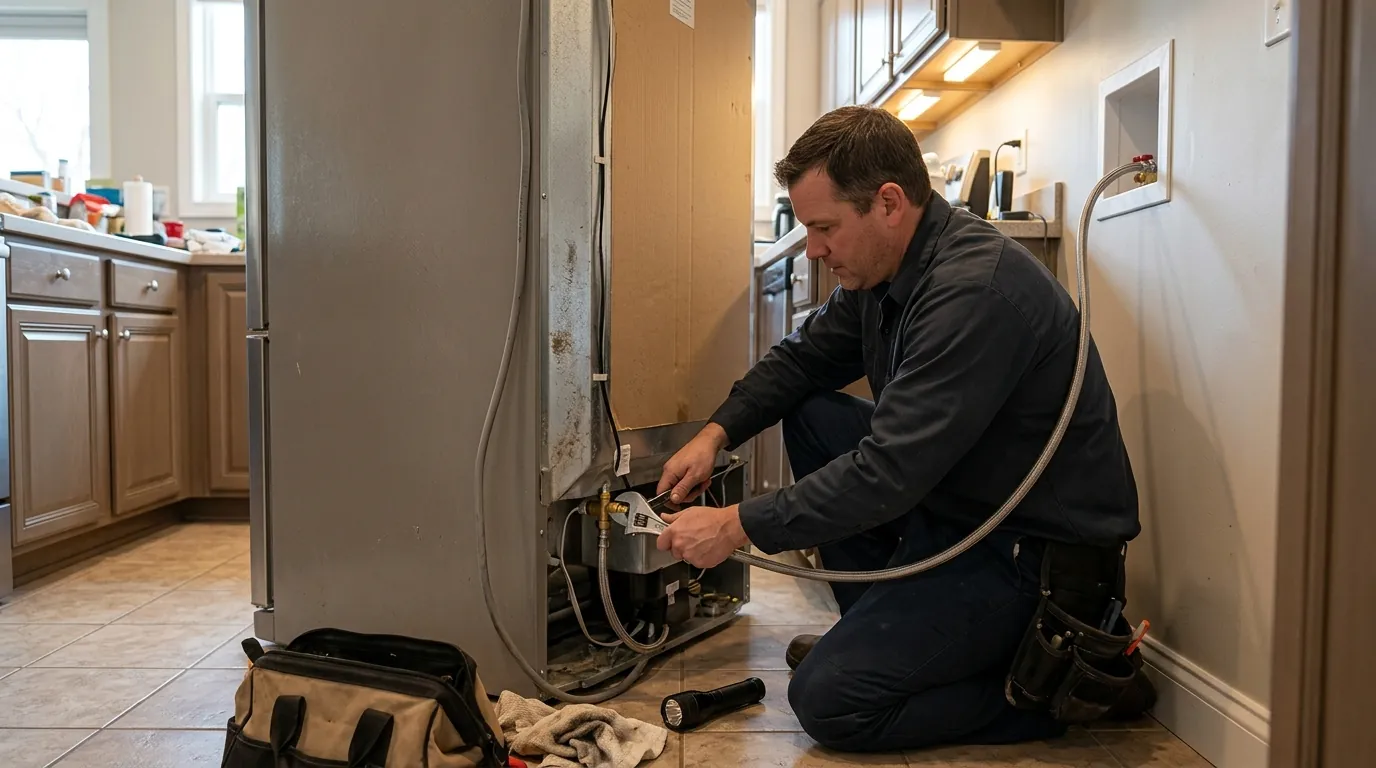
Refrigerator water line installation in Jacksonville means running a new supply line from a dedicated shutoff valve to the refrigerator, replacing old or leaking lines with braided stainless, adding an inline filter when the fridge has none, and checking every connection for drips under pressure.
Many older refrigerator lines are thin plastic or copper tubing connected with a saddle valve that pierced the pipe. Plastic lines get brittle and kink when the fridge is pushed back. Saddle valves weep over time. Either one can leak slowly for weeks before anyone notices.
A good installation uses a proper quarter-turn shutoff valve, a braided stainless line long enough to pull the refrigerator out for cleaning without straining it, and compression fittings tightened correctly. We flush the line before connecting it so sediment does not clog the fridge's inlet valve.
Cost
Water line work is priced per job. Replacing a line at an existing valve is quick; running a new line from a distant supply takes longer.
No flat price over the phone. We price after the diagnosis, part and labor separately, so you can decide before any work starts.
DIY or call
| Task | Safe to try yourself | Call a technician |
|---|---|---|
| Tighten a dripping nut | A quarter turn with water off | If it still drips |
| Replace a plastic line | Possible at an existing valve | If the valve is a saddle valve |
| New line from a distant supply | Not recommended | Always |
The jobs this page covers
For a refrigerator that has never had water, we find the nearest cold water supply, add a quarter-turn shutoff valve and run a line to the refrigerator location through the cabinet, the wall or the floor depending on where the supply is. We keep the route tidy and protected from kinks, leave a service loop behind the fridge and connect it to the inlet valve. Then we turn the water on, check every fitting, and run the dispenser to flush air and sediment out of the new line.
Water under the refrigerator or a stained floor behind it usually comes from the supply line or its fittings. We pull the fridge forward, dry the area and find the leak, often a cracked plastic line, a loose compression nut or a weeping saddle valve. We replace the whole line rather than patching it, swap a saddle valve for a proper shutoff, and check the refrigerator's own inlet valve too. If the floor has been wet for a while, we point out what to watch for as it dries.
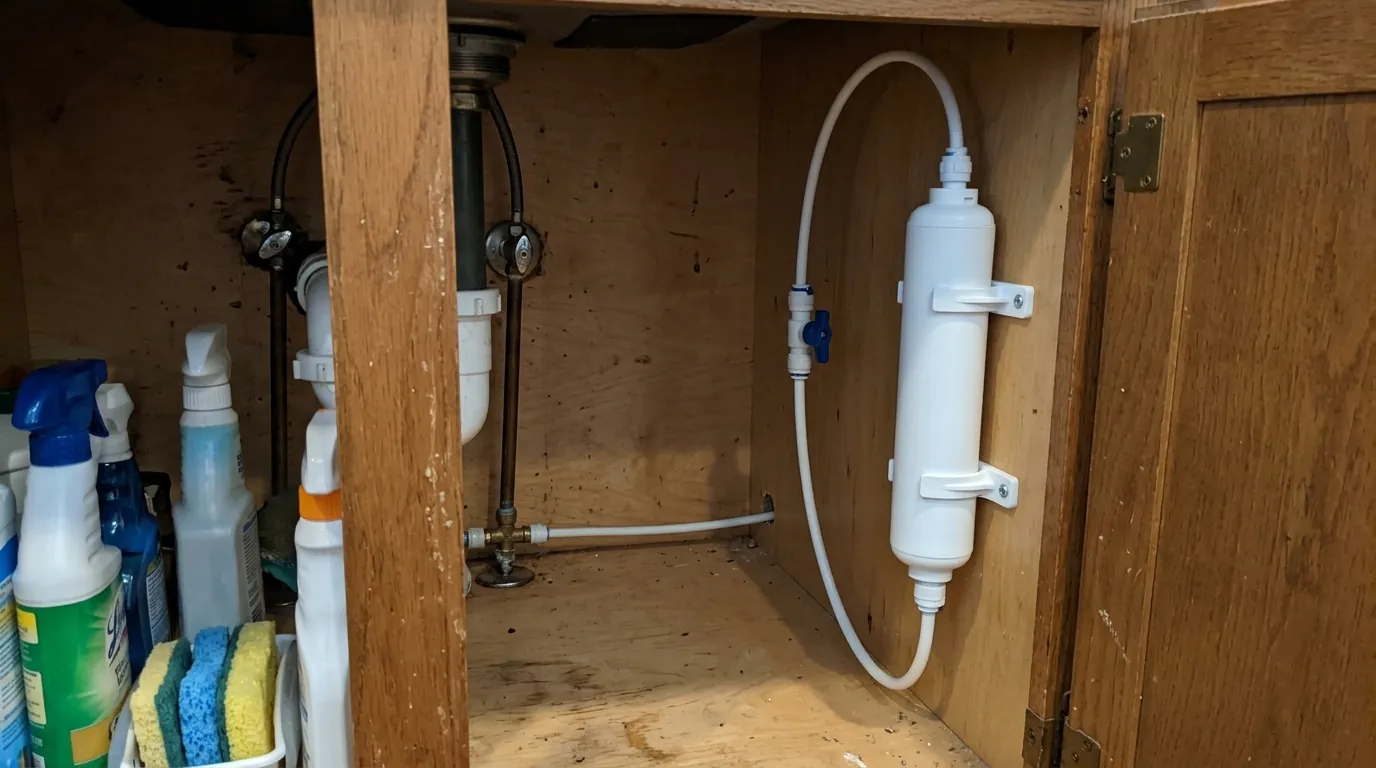
Some refrigerators have no built-in filter, and some owners prefer an inline filter on the supply line. In a hard-water area a filter reduces sediment and chlorine taste, although it does not soften the water. We install the filter where it can be reached for replacement, mark the date on it, and tell you the replacement interval. If your refrigerator already has a built-in filter, a second inline filter is usually unnecessary and can lower flow to the ice maker.
What is included
Many Jacksonville homes sit on slab floors with tile or laminate, and a slow leak behind a refrigerator can travel under flooring before it shows. That is why we replace plastic lines and saddle valves rather than tightening them, and why we leave enough slack for the fridge to roll out for cleaning without pulling on the fitting.
Step by step
Nearest cold water and the route.
Quarter-turn shutoff, no saddle valves.
Braided line with a service loop.
Every fitting checked, line flushed.
FAQ
Plastic lines crack, compression fittings loosen and saddle valves weep. Replacing the line and valve is the lasting fix.
Braided stainless with a proper shutoff valve.
Enough to roll the refrigerator out for cleaning without strain, coiled loosely behind it.
Only if the refrigerator has no built-in filter or you want extra sediment filtration.
Usually, through cabinets, the wall or under the floor, depending on access.
Also on the list
New refrigerators, ranges and wall ovens set in, leveled, connected and tested, with the old one hauled away on request.
DetailsReplacement swaps, new dishwasher locations and panel-ready fittings, connected and leak-tested.
DetailsNew washers and dryers connected, vented, leveled and tested, including stacking kits and dryer cords.
DetailsGas ranges, cooktops and dryers connected with new flexible connectors and leak-tested at every joint.
DetailsCall and tell us where the nearest sink or water supply is. We will plan the route.
Duval Appliance serves Jacksonville and the First Coast from 6504 Leona Street in northwest Jacksonville.