The four parts of a repair bill
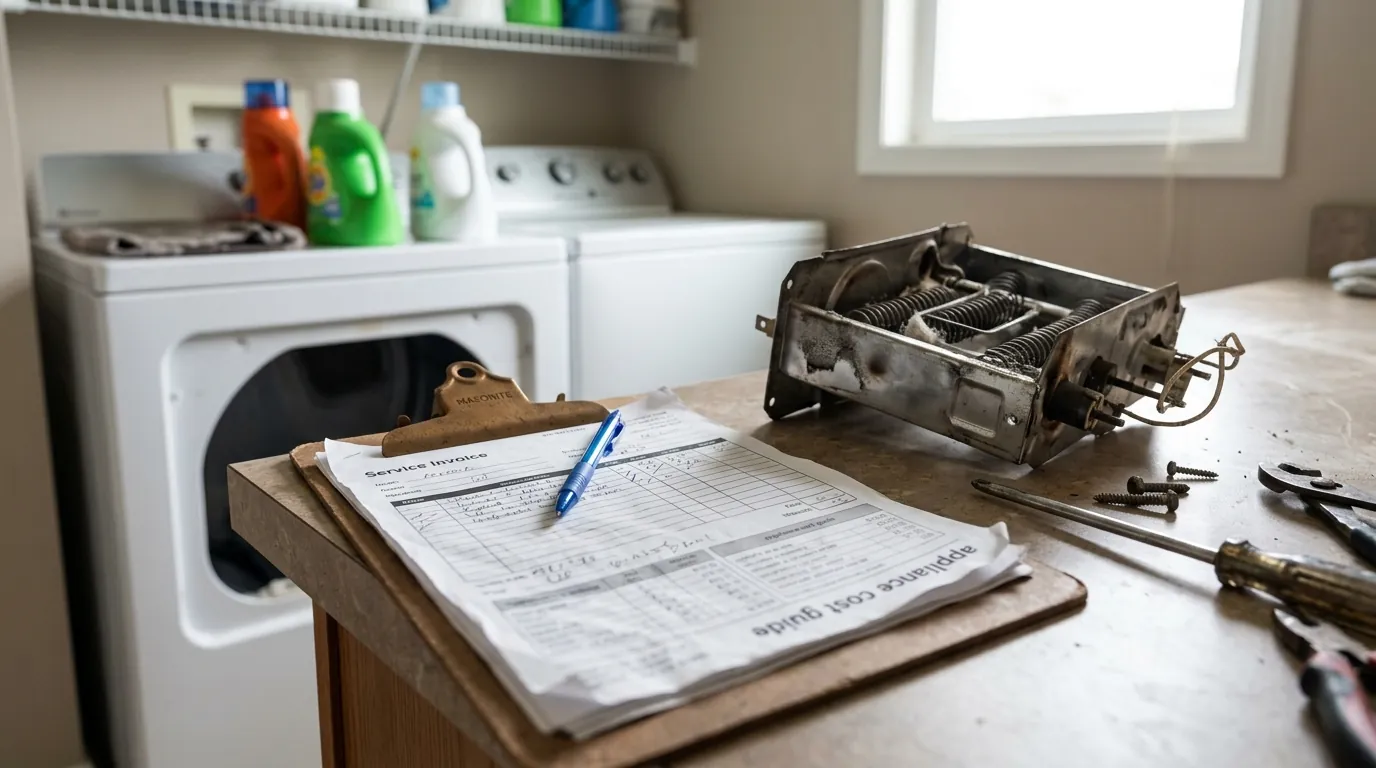
Every appliance repair bill is built from the same pieces. There is the trip to your home, sometimes listed as a service or diagnostic charge. There is the time it takes to find the fault. Then there is the part itself and the labor to install it. Some companies roll the trip into the repair if you go ahead; others charge it either way. Ask how it works before you book, so the number you hear on the phone means the same thing as the number on the invoice.
National cost data puts a typical service or travel charge at roughly $50 to $100 per job and hourly labor at roughly $50 to $150 an hour. Those figures are averages across the country, not quotes, but they help you tell whether a price is in a normal range.
Typical ranges by appliance
Published national cost data gives these typical repair ranges: refrigerators about $40 to $350, washers about $50 to $450, dryers about $100 to $400, dishwashers about $50 to $500, ovens about $100 to $430, stoves about $100 to $500, microwaves about $50 to $400, freezers about $90 to $500, ice makers about $90 to $250 and garbage disposals about $70 to $250.
The wide spread inside each range comes from the part. A dryer belt or a refrigerator start relay sits at the bottom. A control board, a compressor or a front-load washer's bearing kit sits at the top or above it.
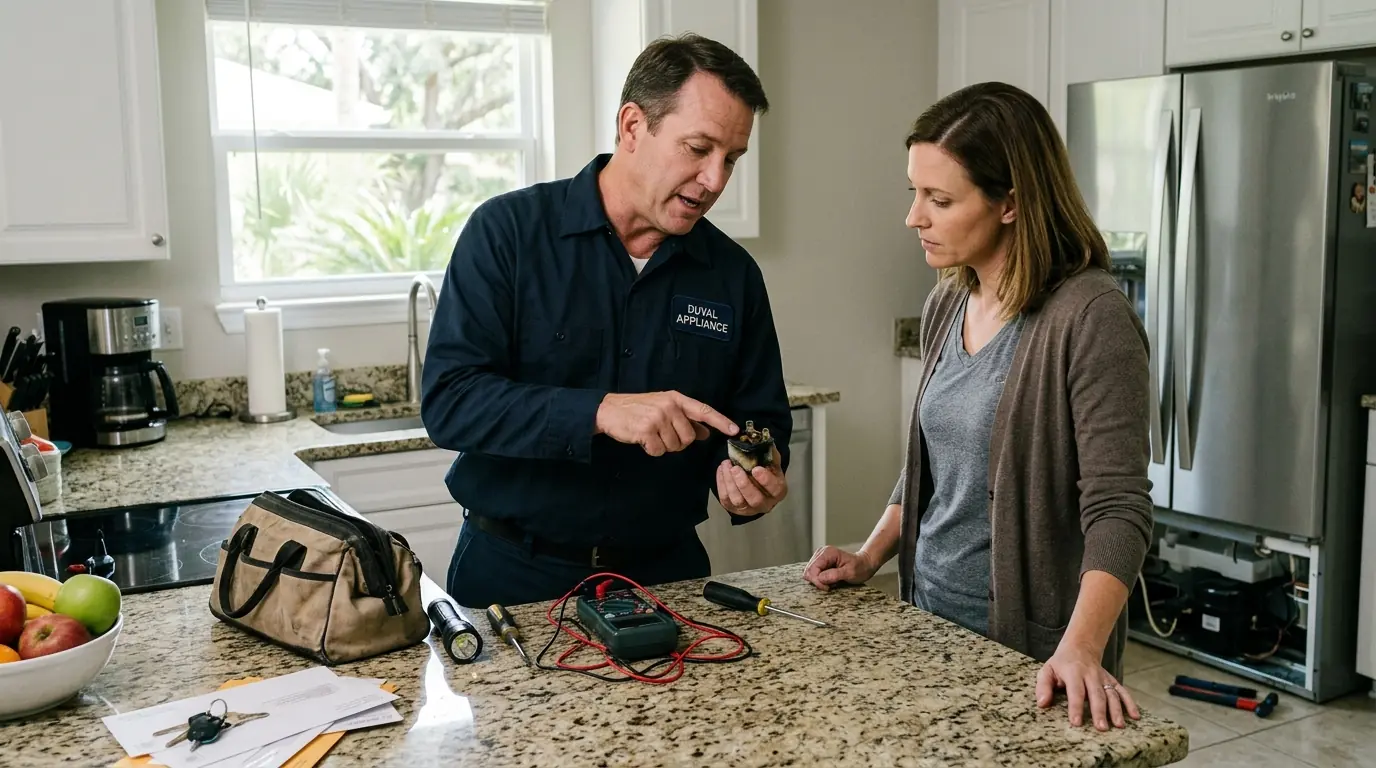
What pushes a Jacksonville repair up
Built-in and high-end brands cost more because their parts cost more and are usually ordered. Wall ovens, stacked laundry and units boxed in by cabinets take longer to reach. Gas appliances carry a premium in the national data, about $150 to $450 for a typical gas repair. After-hours and holiday visits can carry an emergency fee, which national data puts at about $50 to $200.
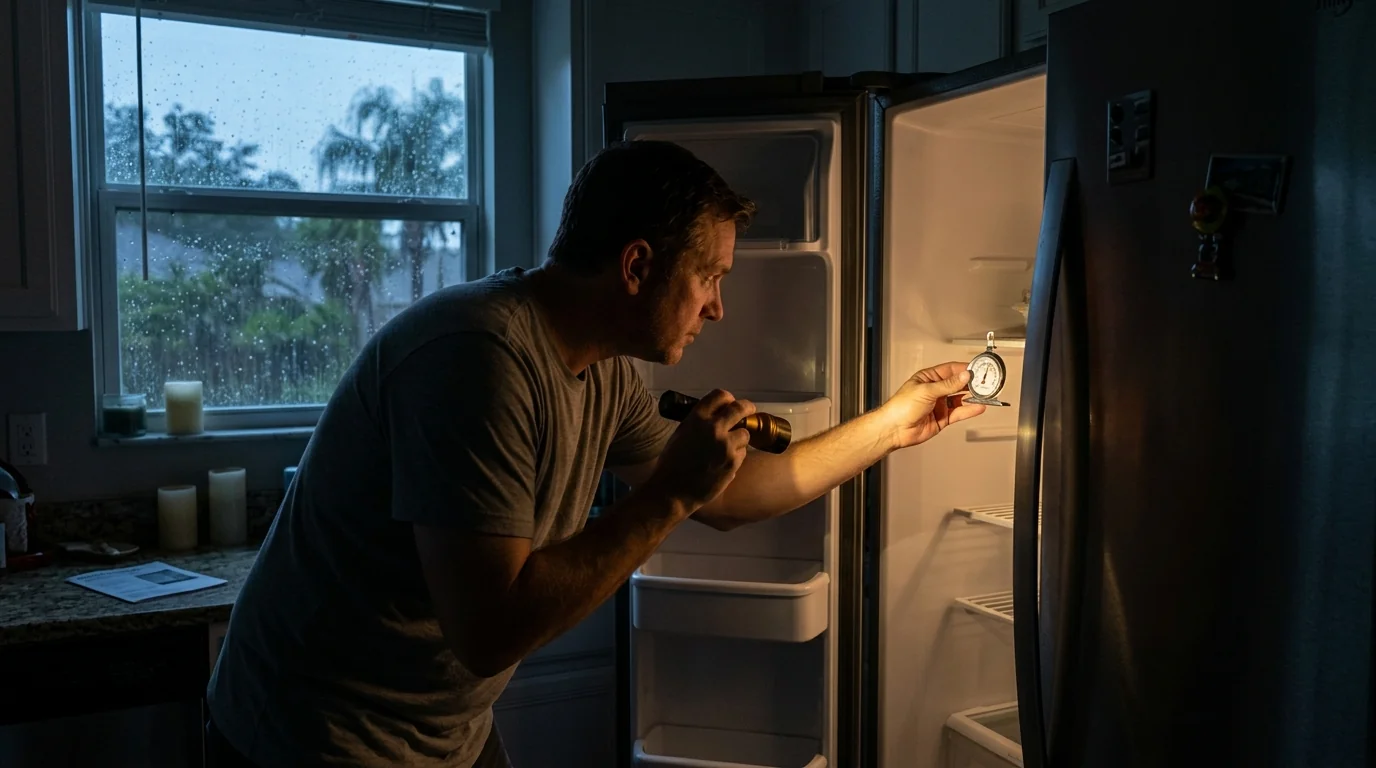
Storm season adds its own pattern. Control boards damaged by surges and outages are some of the more expensive parts on a modern appliance, and they tend to fail in clusters after a big storm.
Want a real number for your appliance? Call and describe it. We quote after diagnosis, before any work.
Call (904) 907-8788What keeps a repair small
Catching a problem early is the biggest money saver. A refrigerator with dusty coils that runs long gets a cleaning; the same refrigerator a year later may need a fan motor or a relay. A dryer that takes two cycles needs a vent cleaning; ignore it and the thermal fuse or element follows.
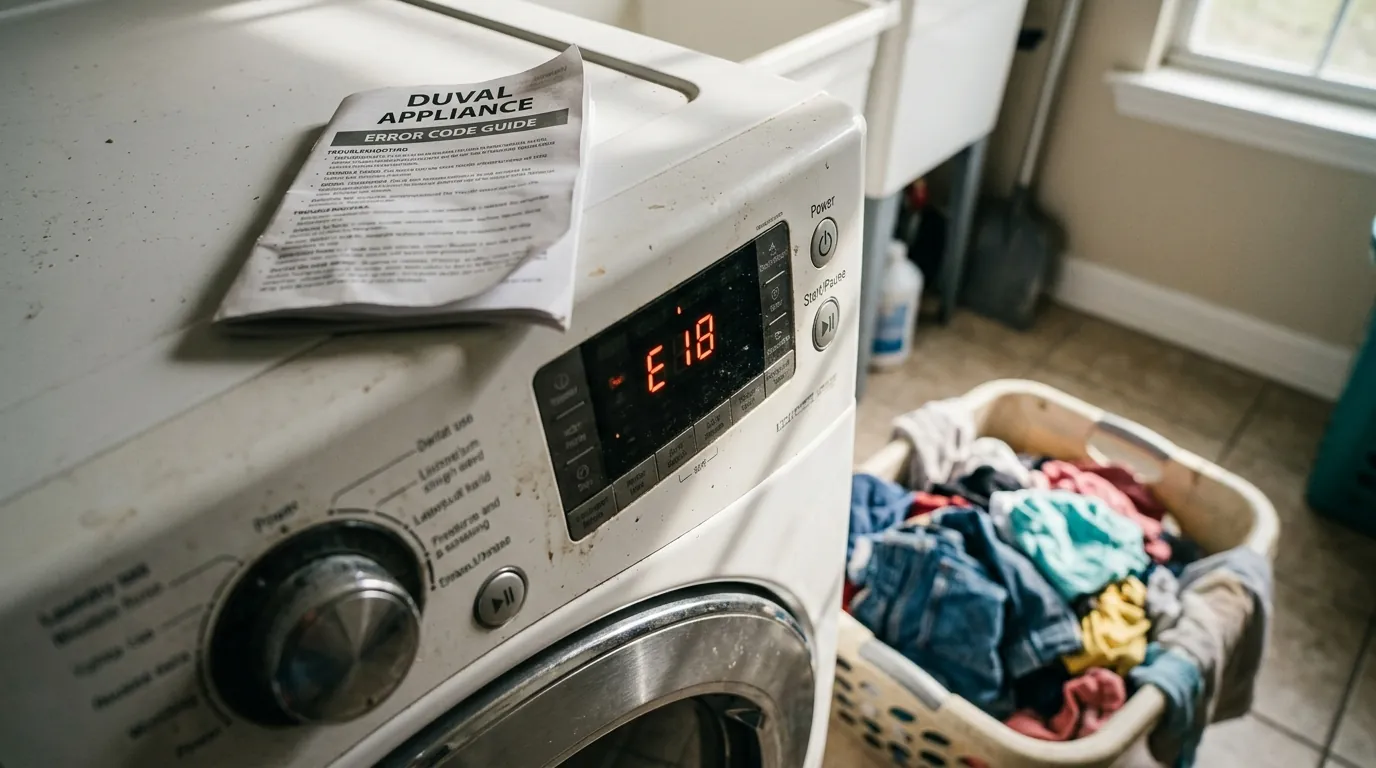
Describing the symptom clearly on the phone also helps. When the technician arrives with the likely part on the truck, the repair is finished in one visit, and you avoid paying for a second trip.
When the number says replace instead
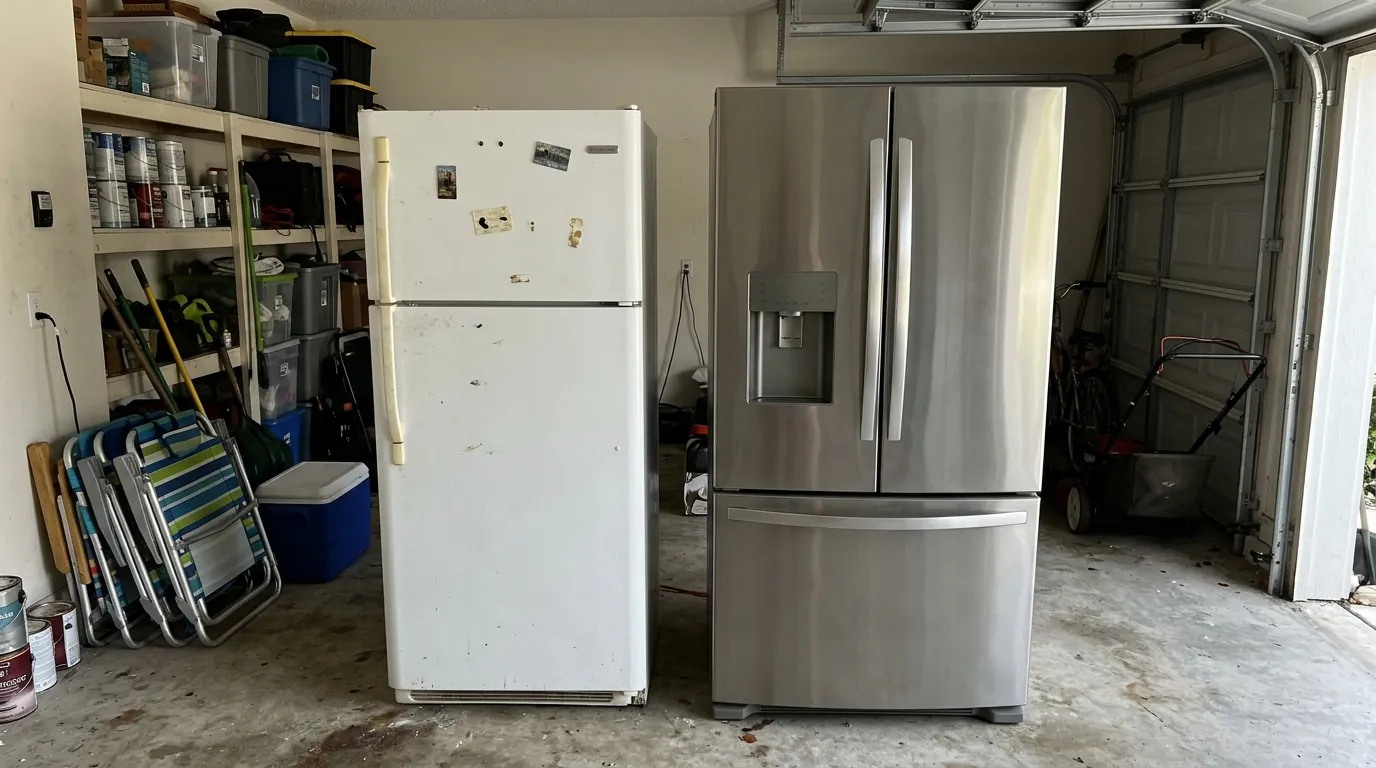
A common rule of thumb is to think hard about replacement when the repair approaches half the cost of a comparable new appliance, especially if the appliance is past the middle of its expected life. A sealed-system repair on an older standard refrigerator is the classic example.
The reverse is true for well-built and high-end appliances. A professional range or a built-in refrigerator is designed to be repaired, and replacing it usually costs far more than any single repair.