Why humidity makes it worse
Jacksonville averages close to 90 percent relative humidity in the morning. A front-loader sealed tight after a wash, in a closet or garage with that kind of air, stays damp inside for days. Mold and bacteria feed on detergent residue and fabric softener in the damp spots.
Top-loaders smell less because their lids are usually left up and their tubs drain more completely. Front-loaders need a little more help.
Where the smell hides
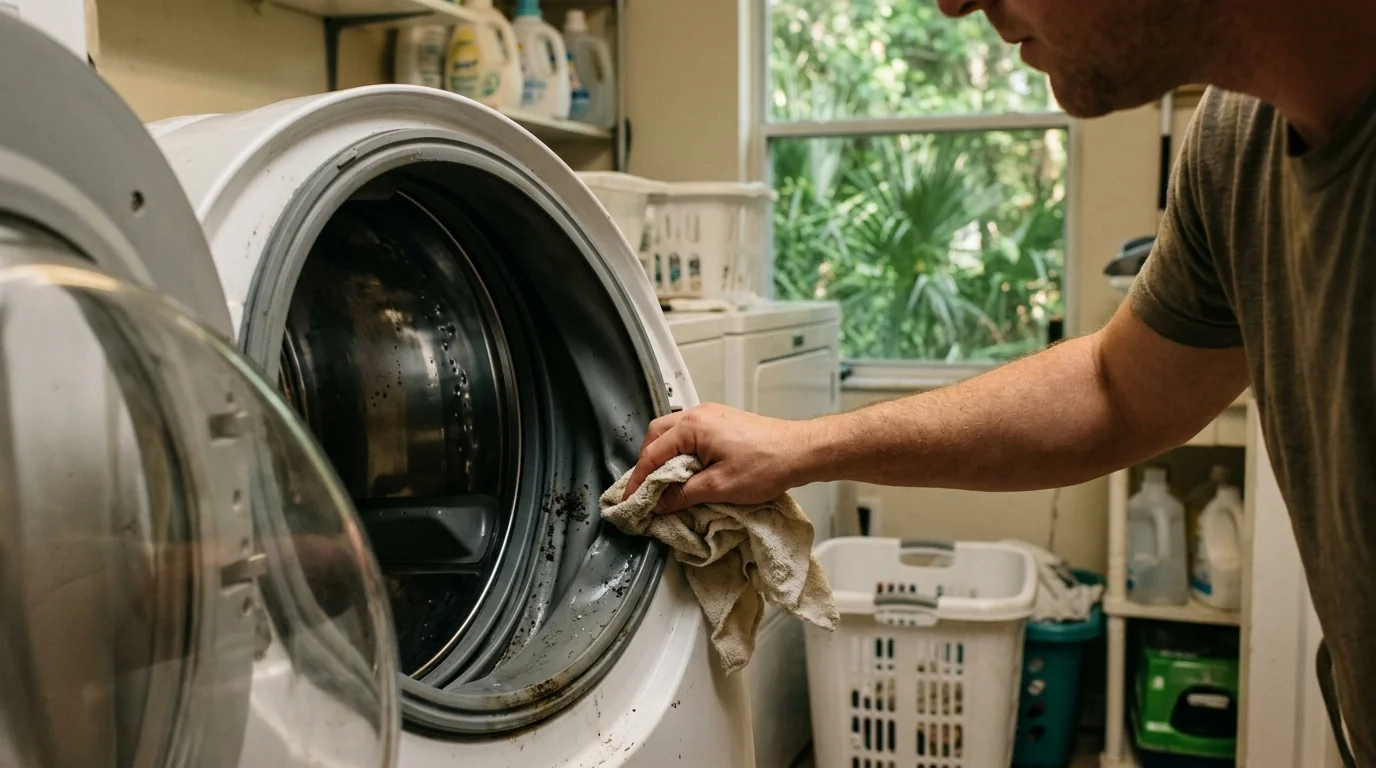
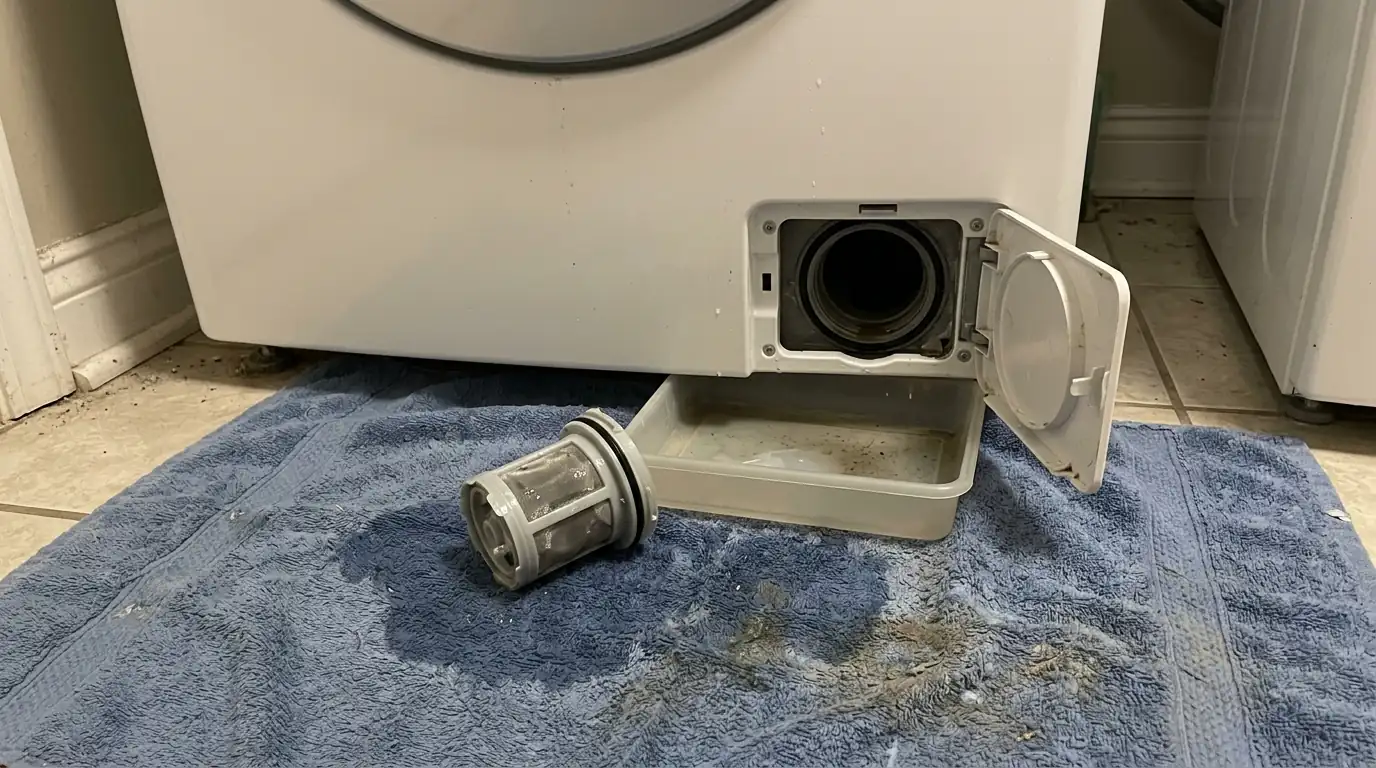
The rubber door boot has folds that hold a ring of water and lint. The pump filter at the bottom front holds water, hair and small items. The detergent drawer and its housing collect softener and slime. The space between the inner drum and the outer tub collects residue that only a hot cleaning cycle reaches.
A cleaning routine that works
Wipe the door boot folds with a towel, using a mild cleaner on any black spots. Open the pump filter over a shallow pan and towel, drain it, clean the filter and put it back snugly. Pull out the detergent drawer and wash it in the sink. Then run the washer's cleaning cycle, or the hottest cycle, with a washer cleaner.
Do this monthly and the smell rarely comes back.
Smell keeps coming back? A torn door boot may be holding water. Call and we will check it.
Call (904) 907-8788Two habits that prevent it
Leave the door and the detergent drawer open between loads so the inside can dry. Use HE detergent and measure it; too much detergent leaves residue that feeds odor and causes suds errors. Skipping fabric softener, or using less, also helps.
Moving wet clothes to the dryer promptly keeps both the clothes and the washer fresher.
When it is a repair, not a cleaning
A torn door boot holds water you cannot reach and often leaks at the bottom of the door during the wash. A pump filter that keeps clogging may point at a failing pump. Black mold deep in the boot folds that does not clean up may mean the boot should be replaced. Those are repairs we handle, usually in one visit.