Where the lint goes
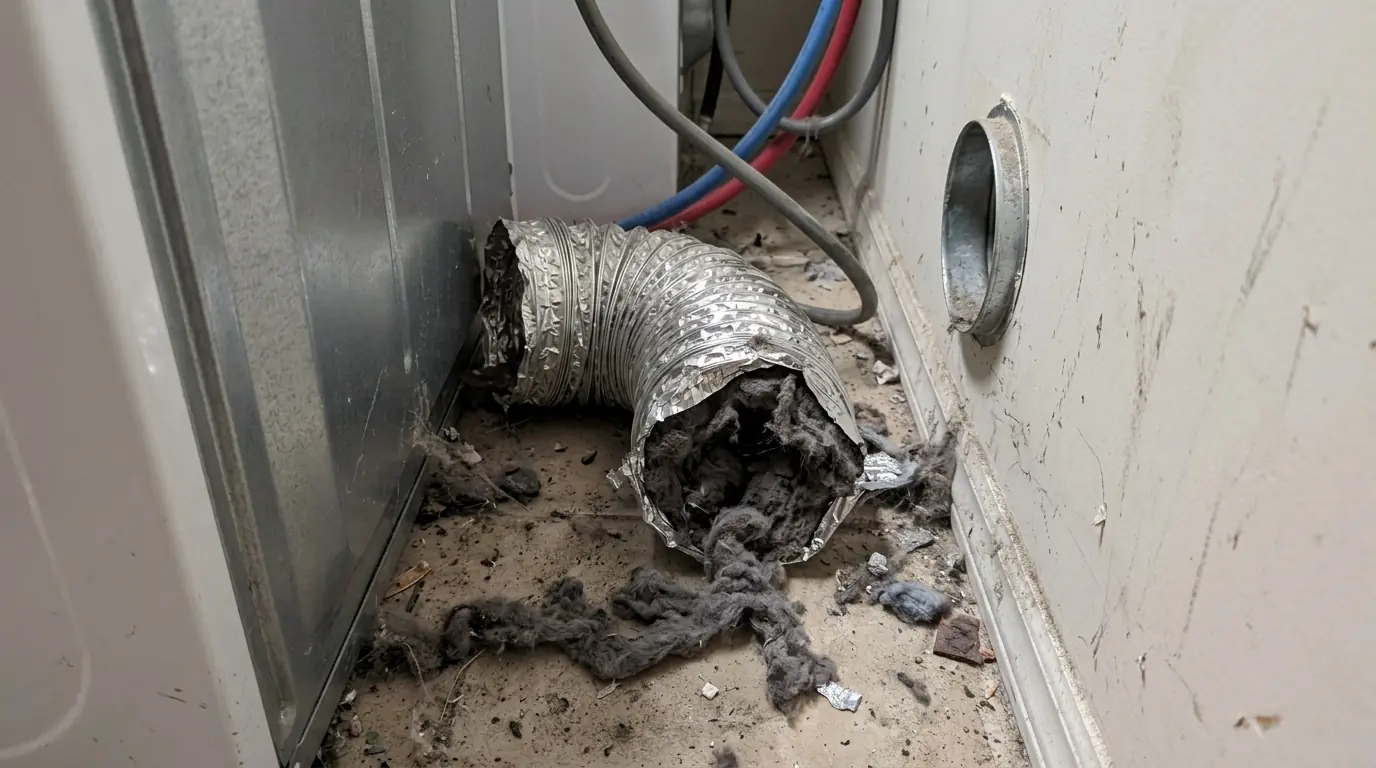
The lint screen catches most of the lint, not all of it. The rest travels with hot, damp air into the duct, where it sticks to the walls, piles up at elbows and mats against the flap at the outside hood. Over a year or two the duct narrows and the airflow drops.
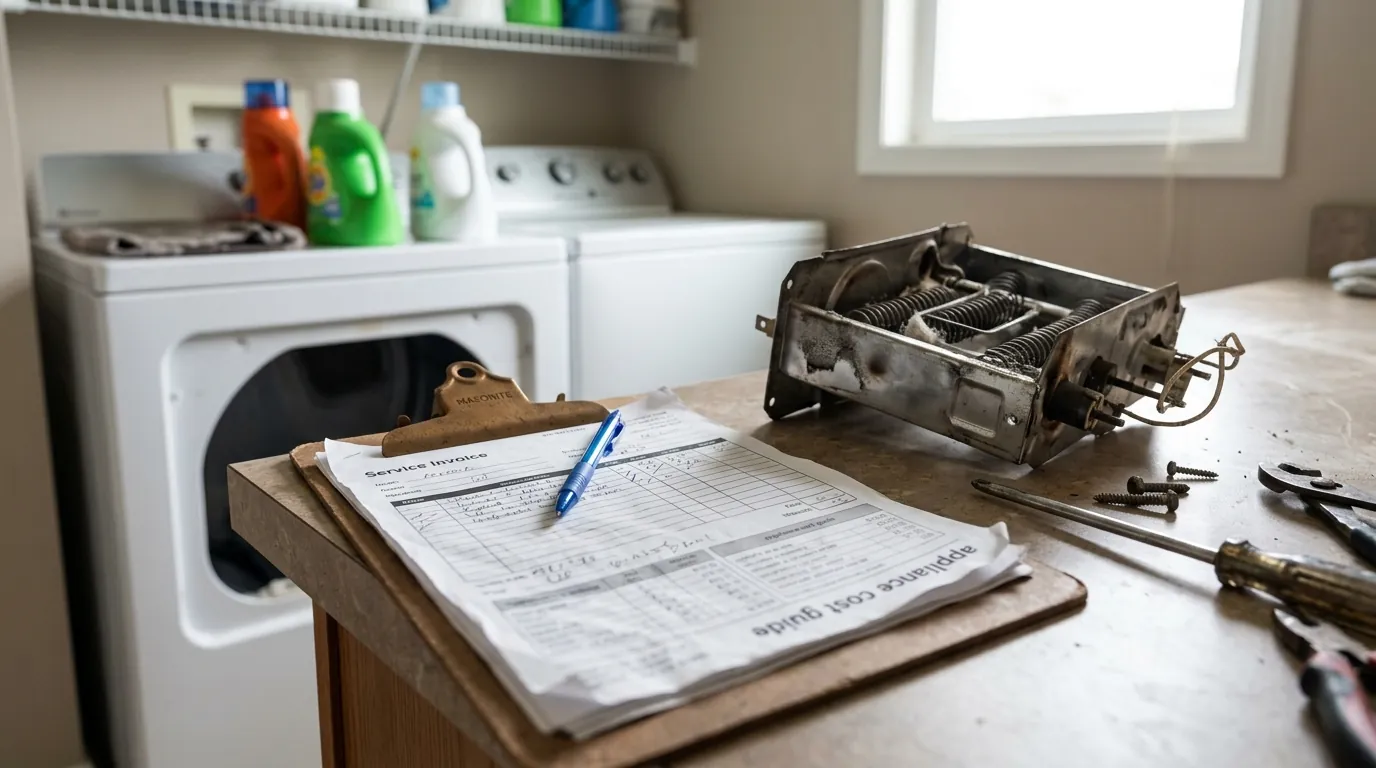
Less airflow means wet air stays in the drum longer, so loads take longer. It also means the heater runs hotter, which is why restricted vents blow thermal fuses and wear out heating elements.
What the fire numbers say
National fire data counts nearly 3,000 clothes dryer fires every year, with failure to clean the leading cause at about 34 percent. The fires usually start when lint near the heater or in the duct ignites.
Cleaning the lint screen every load and the vent run about once a year removes most of that risk.
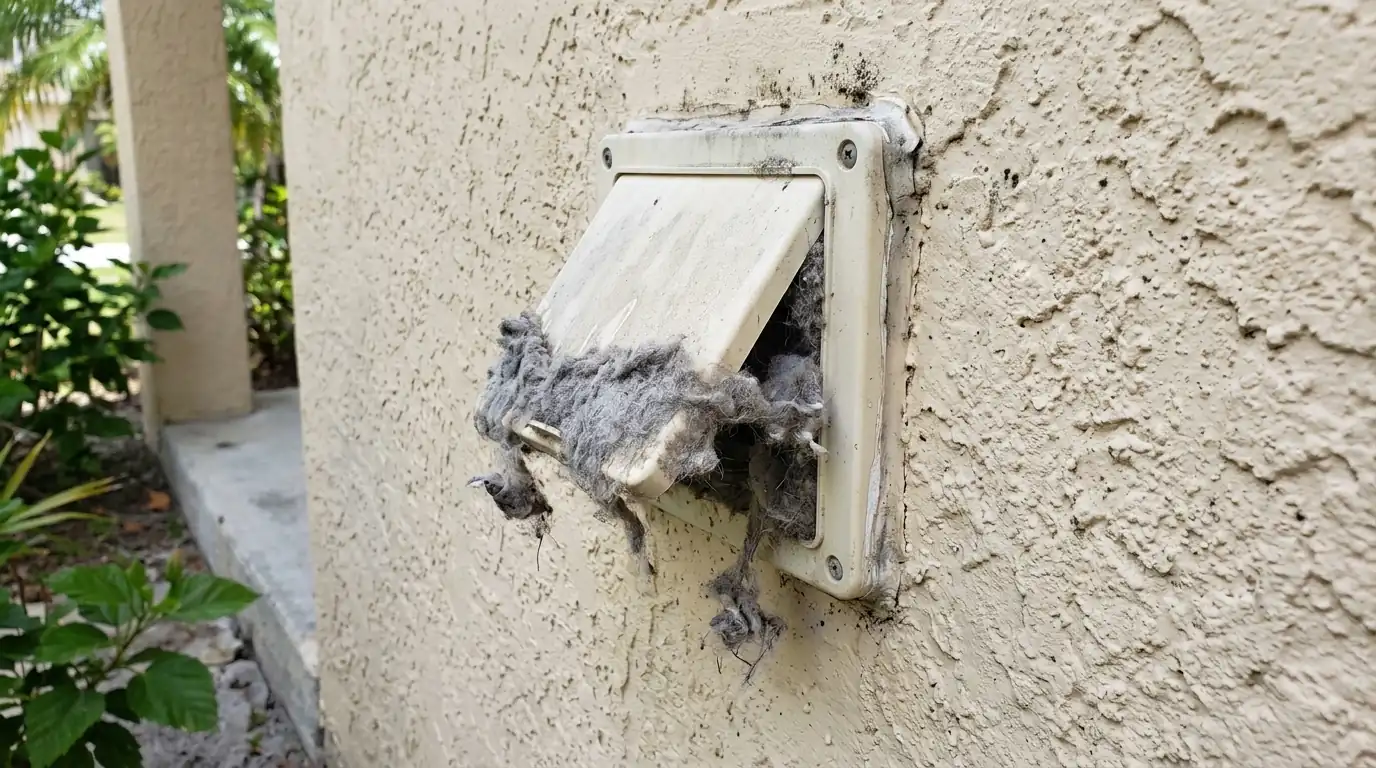
Signs your vent is clogged
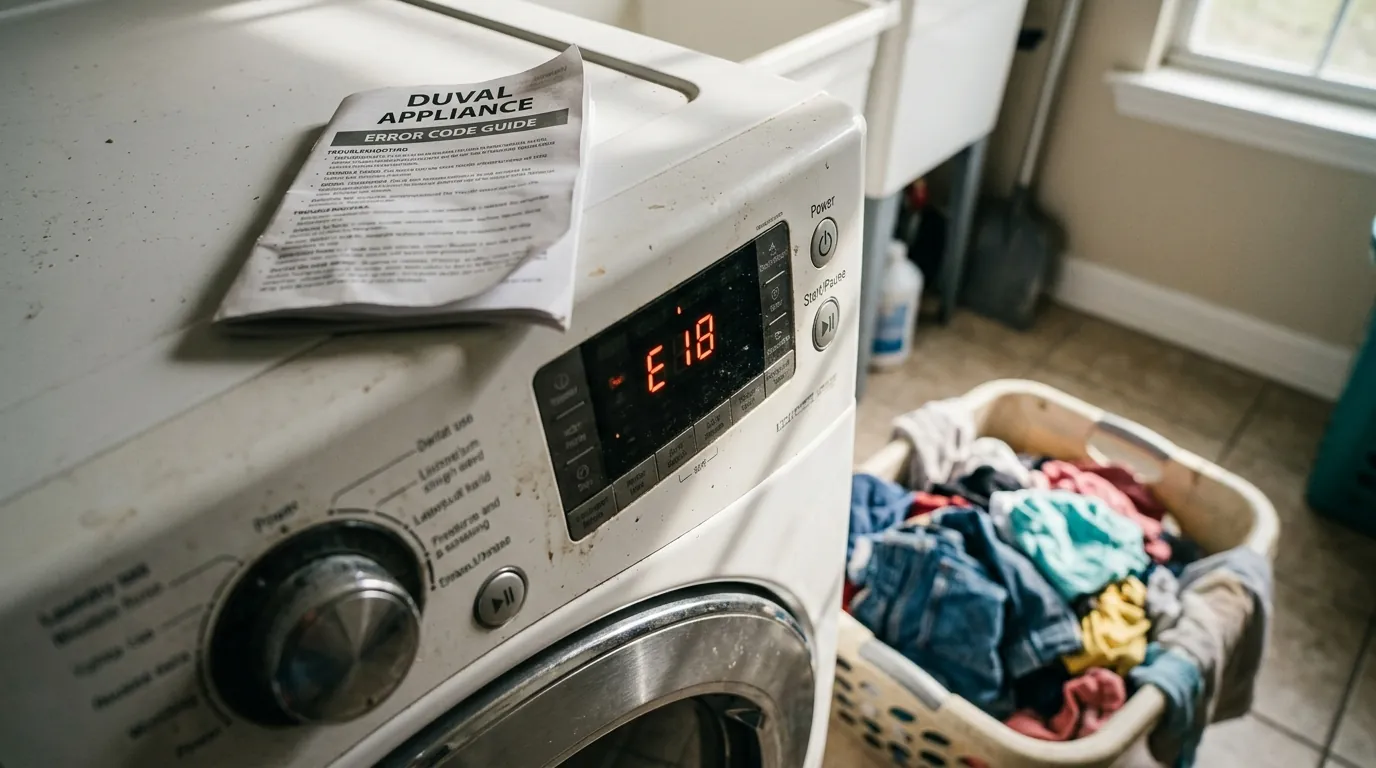
Loads take two cycles. The dryer cabinet or the laundry room feels hot. Clothes come out hot but damp. The outside hood flap barely opens when the dryer runs on high. Lint collects around the outside hood. Some dryers, such as LG models with Flow Sense, display codes like d80, d90 and d95 to estimate how blocked the vent is.
Two cycles to dry a load? Call to book a full vent cleaning with airflow measured.
Call (904) 907-8788Why some homes clog faster
Long vent runs, roof exits, many elbows and flexible foil or plastic transition hoses all clog faster than a short, straight wall vent. Two-story homes and interior laundry rooms often have exactly that setup. Stacked units in closets crush their transition hoses against the wall.
Those homes benefit from a yearly cleaning, and sometimes from a new, shorter route or rigid metal duct.
What a proper cleaning includes
A full vent cleaning disconnects the dryer, brushes the entire run with rotary brushes and air, clears the outside hood or roof cap, vacuums the lint screen housing, replaces crushed or foil transition hoses with metal, and measures airflow before and after so you can see the result.