A week before the storm
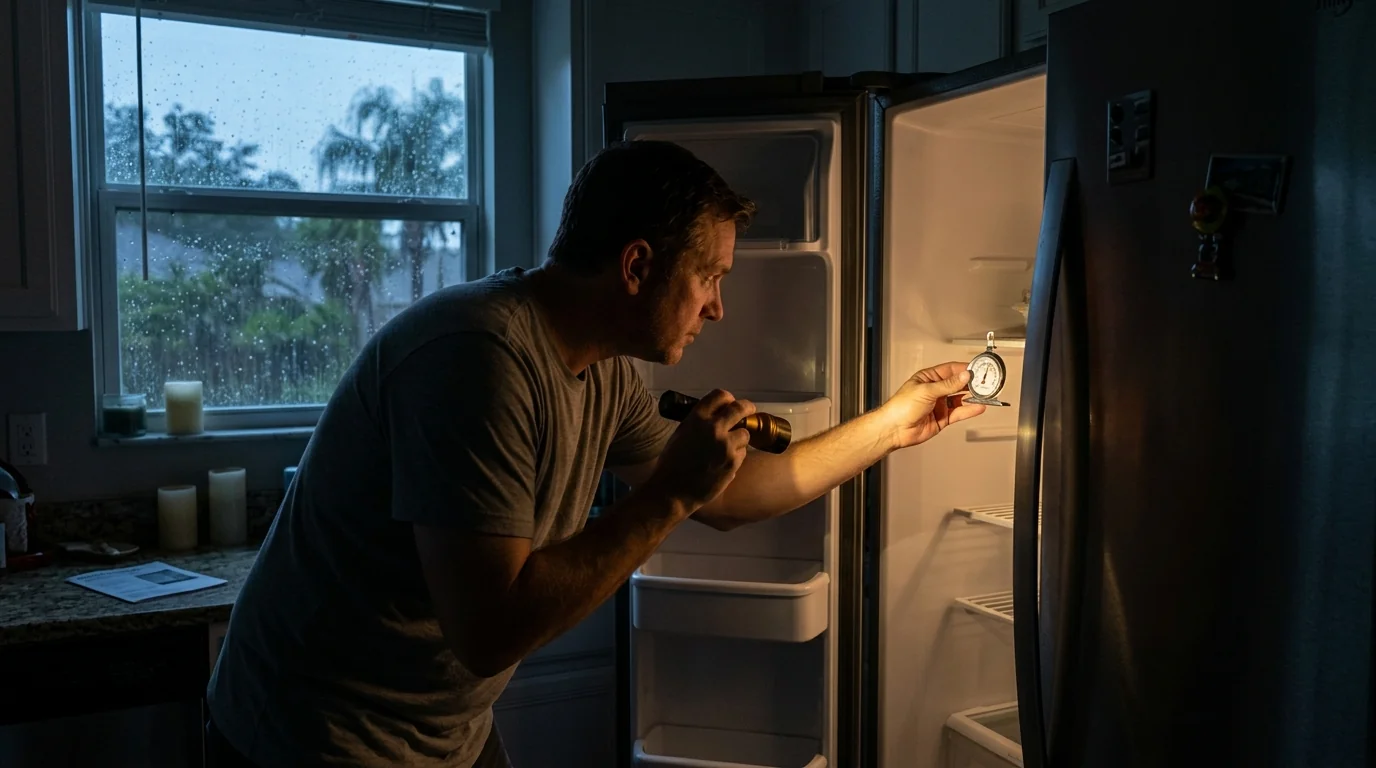
Clean the condenser coils if you have not done it this year, so the refrigerator can pull down quickly after the power comes back. Check the door gaskets for tears. Put an appliance thermometer in both the freezer and the refrigerator so you can read real temperatures later instead of guessing.
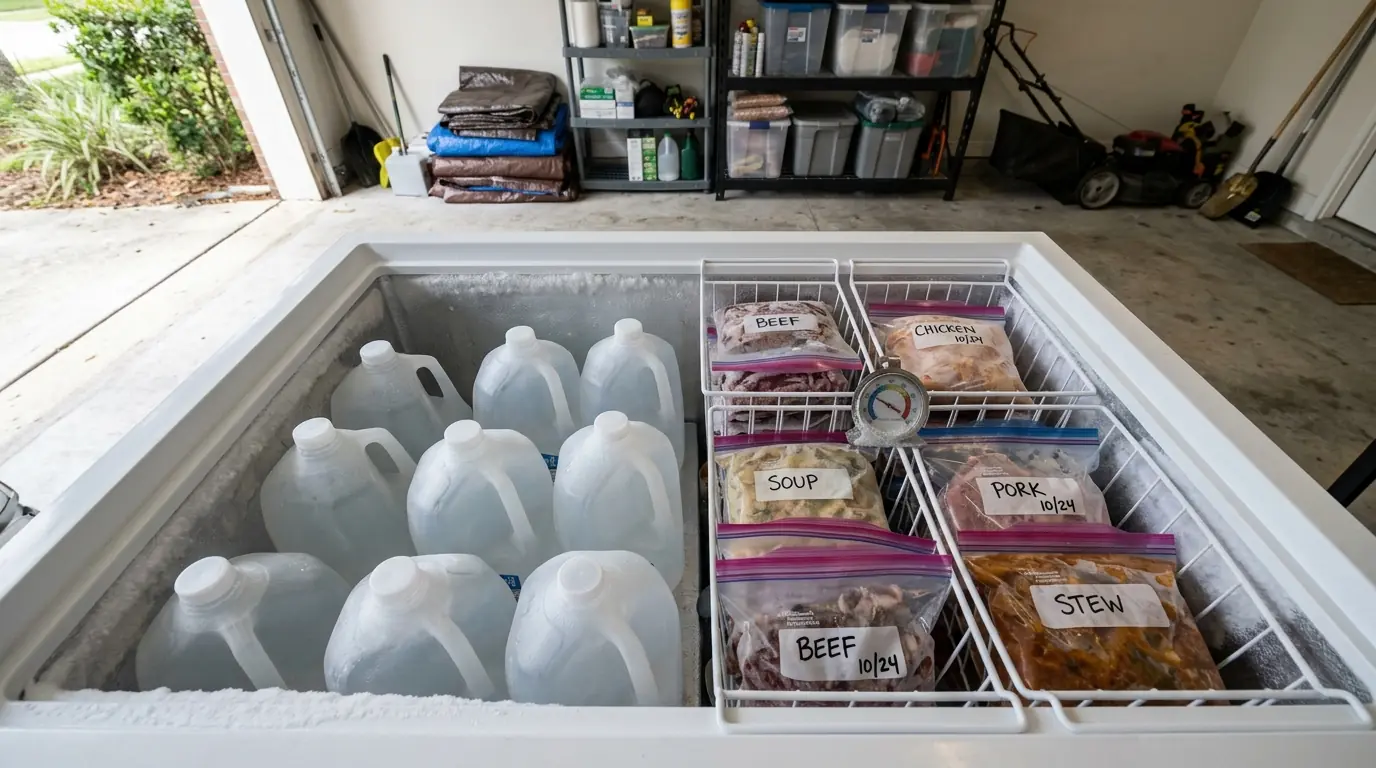
Freeze water in jugs or bottles and fill any empty freezer space with them. A full freezer stays cold much longer than a half-empty one, and the jugs keep the refrigerator cold if you move them over during the outage.
The day before landfall
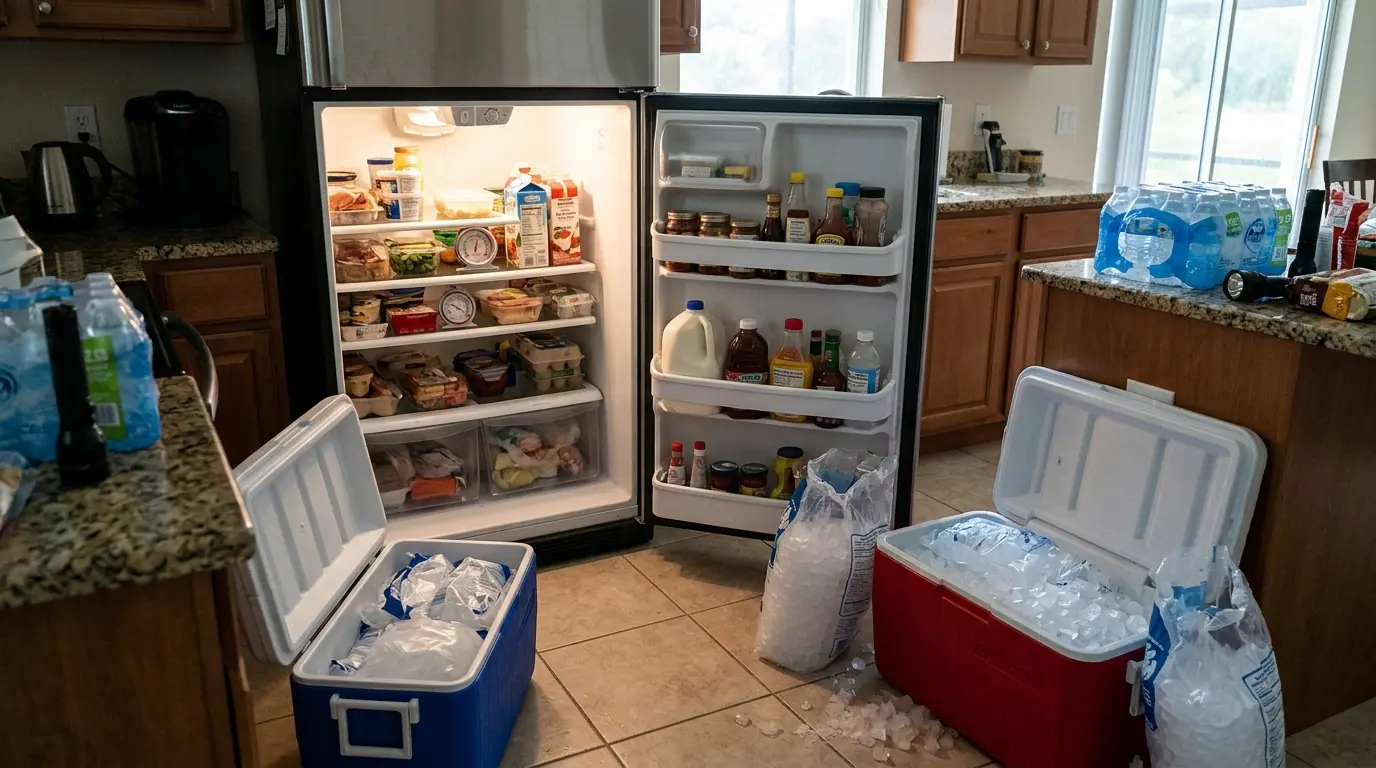
Turn both compartments to their coldest settings. Move the food you will need first to the front so the doors open briefly. Fill coolers with ice for drinks and daily food, so the refrigerator and freezer stay closed.
If you have a garage freezer, check its outlet and the GFCI it may be on. Garage GFCIs trip easily in storms and are a common reason freezers stay off afterward.
During the outage
Keep the doors shut. A full freezer holds food frozen for about two days, a half-full one about a day, and a refrigerator about four hours. Every opening shortens that.
If you run a generator, follow its safety instructions carefully and never run it indoors or in a garage. Many households power the refrigerator a few hours at a time rather than continuously, which keeps it cold without draining fuel.
Fridge will not restart after the storm? Call early. Keep the doors closed while you wait.
Call (904) 907-8788When the power comes back
Listen for the compressor and fans. Watch the thermometers. The freezer should start dropping within the first hour. A click every few minutes with no cooling points at a start relay that failed during the restart, a common and quick repair.
Do not reload thawed food from coolers until both compartments are back below 40 and 0 degrees. Check food safety guidance and throw out anything questionable.
If it will not restart
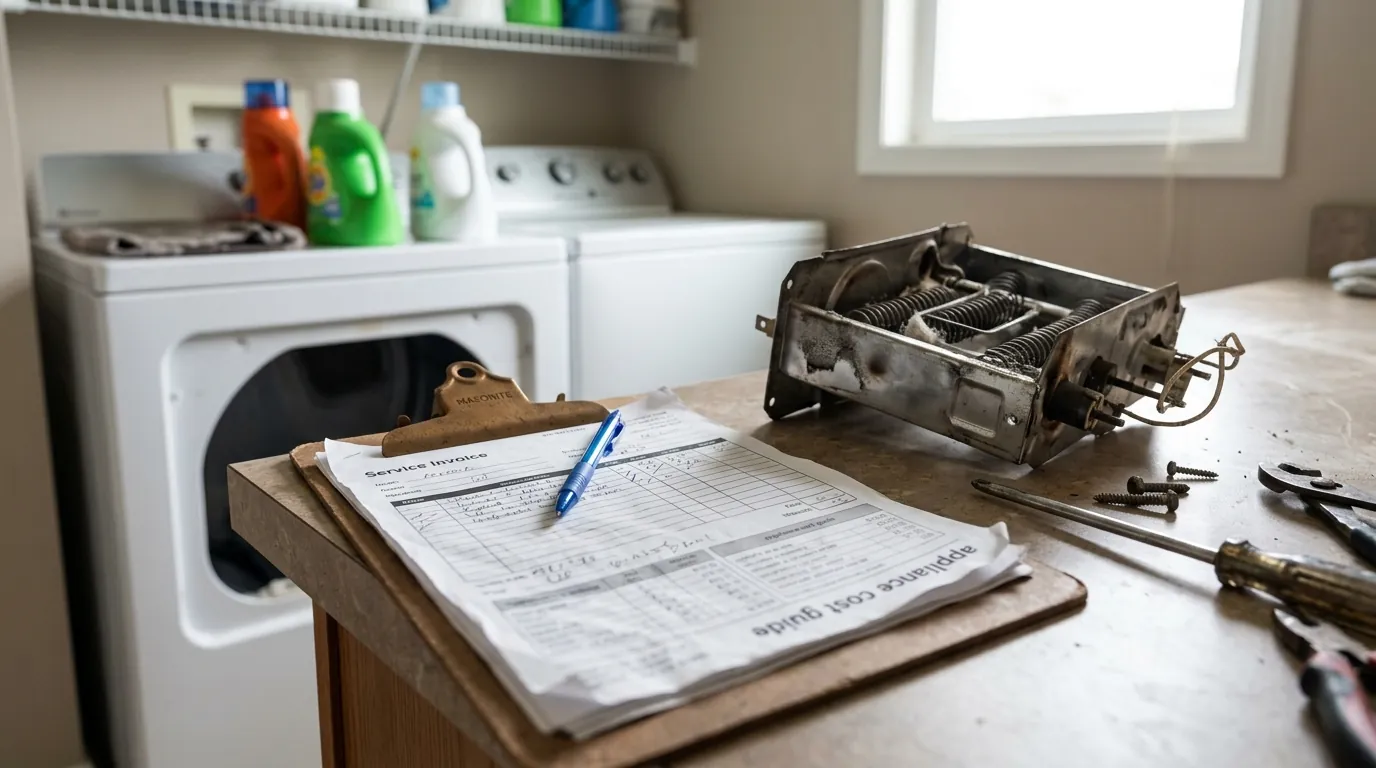
Check the breaker and any GFCI first. If the refrigerator still will not run, or runs without cooling, call for a repair. After big storms, every repair company in the area gets busy for several days, so call as early as you can and keep the doors closed while you wait.